A Collection of Early Warning Signs From Job Interviews
It’s the holiday season, and I find myself in a particularly giving mood. Since I’ve recently been through another round of job interviews, I thought I’d share some stories about the red flags I’ve come across along the way. So, grab your moose of eggnog, get cozy, and brace yourself for stories that’ll make you roll your eyes, shake your head, and maybe chuckle at the bah humbug of it all.
And what better person to accompany us on this joyous journey than the GIF-able office-inappropriate Michael Scott:
And with that, let the festive festivities begin!
🚩 Not respectful of your time
An interviewer who disrespects your time is doing you the courtesy of waving a very large red flag. I’ve experienced everything from ghosting to lateness to repeated rescheduling.
Hey, I get it, the world can be a holly-jolly trainwreck, and some people run on their own timeline. But when an you have a scheduled and confirmed a meeting, make it.
I had a recruiter fully ghost an interview they personally scheduled – no “running late,” no apology, no attempt to reschedule. After waiting 15 minutes, I emailed them, only to later receive a reply suggesting we meet… on a Sunday. (That’s another HUGE red flag, one that I don’t even get into in this post.)
I ignored the Sunday request and suggested times on Monday, only to be ghosted. Again.
Sure, we all have off days. If it’s a one time, clearly explained delay, plus a sincere apology, that’s totes understandable. But no explanation, no apology, and repeated lateness? That’s a candy-cane–striped warning sign.
🚩 A non-present interviewer
A distracted interviewer often signals an overworked, understaffed, and disorganized team. It’s not a impression to leave with a potential hire. Nor is it a culture you want to join.
During an interview with two co-founders, one engaged while the other typed furiously on his laptop and clearly not paying attention. Moments later, the distracted co-founder asked a question that had already been asked and answered. It was an excellent preview of what working with them would be like.
Not on my wishlist.
🚩 Poor, Unclear, or Ineffective Communication
Good, timely communication from an interviewer says as much about them as it does about the organization. Interviews take time and effort. Poor and lack of communication is a preview of workplace culture. After multiple rounds with a team, clear and timely communication isn’t just polite – it’s earned.
At one company, after completing full rounds of interviews, I only learned I wasn’t selected via a LinkedIn message from a panelist, while the recruiter stayed silent for nearly two weeks before finally reaching out. Timely communication would have been far more professional.
Fa-la-la-no thanks!
🚩 Bad Conduct
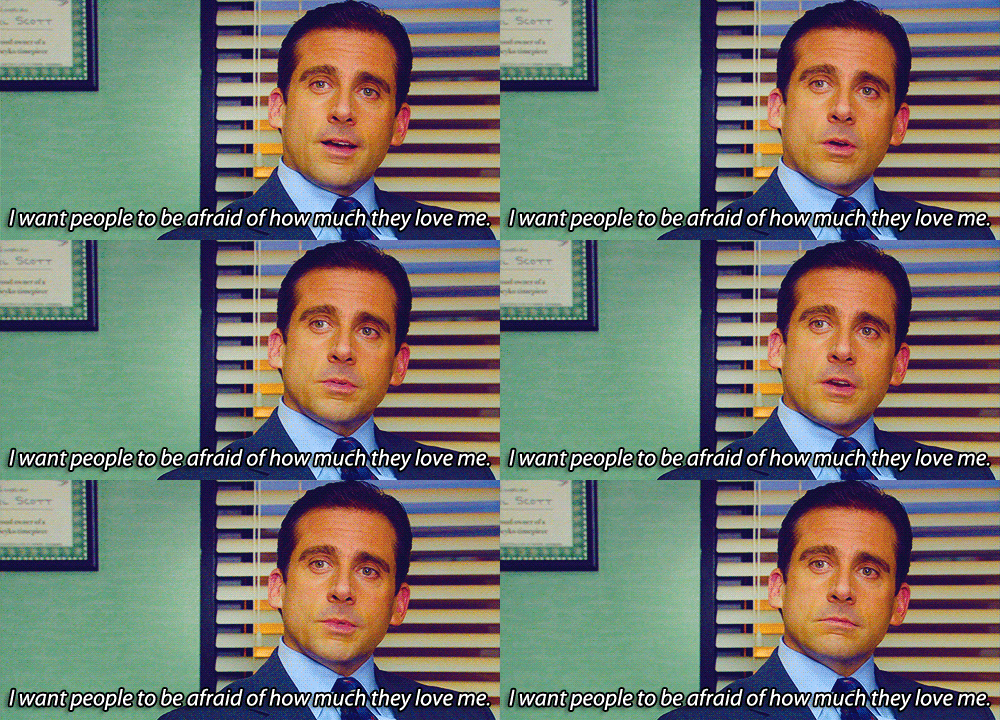
Bad conduct takes many forms. It can be behavioral: interrupting, making dismissive comments, oversharing, or treating the interview as a formality. Or it can have a lack of focus, such as forgetting role details, repeating questions, multitasking, or failing to review a candidate’s résumé and portfolio.
During the final round of onsite interviews at one company, I met the co-founder. It quickly became clear that he hadn’t reviewed my résumé or portfolio and was treating the interview more as a formality than a conversation. He forgot basic details about the role and clearly had zero prep. As the interview went on, he grew visibly annoyed. When I continued asking questions about the company that he couldn’t answer, he threw his hands up in frustration and declared, “I’m just here for culture fit!”
I strongly believe that assessing culture fit is an important part of the interview process. However, I expect interviewers to be prepared, and I especially expect a co-founder to understand how the business operates.
Thanks, but I’ll jingle past this one.
🚩 The Word Slinger
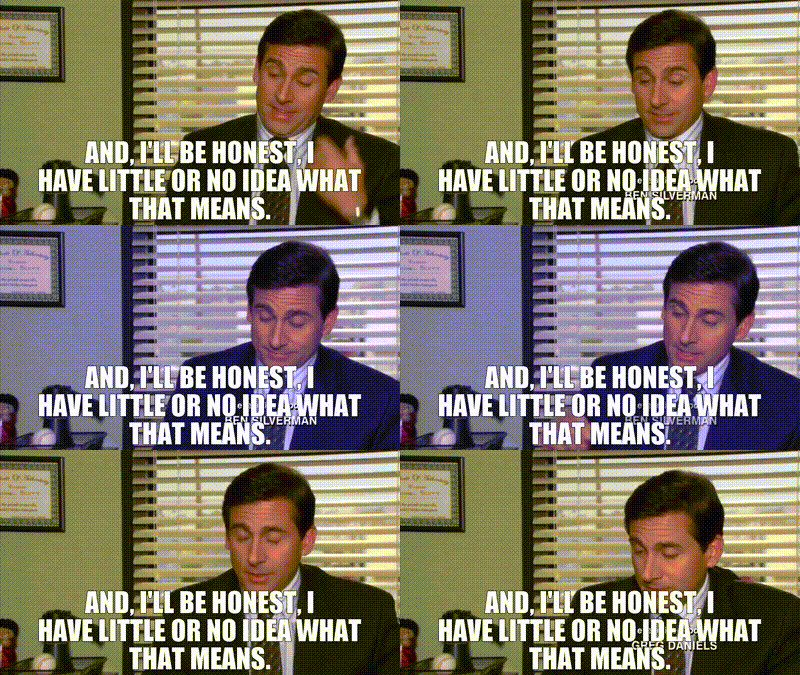
This one is a little nuanced. An interviewer that uses trendy words without understanding is just noise. They might sound impressive, but they don’t actually know what they are saying.
I have experienced this a few times. A newly crowned Head of Product said the term “product design” a shocking 11 times in a 3 minute answer.
Yes, I kept count.
Once he paused, I asked him to tell me what “product design” is and how it fits into the organization.
He continued to use “product design” as buzzword evangelism, and clearly could not explain his underlying understanding, process, or effort. His confident incantation of “product design” made me think that a Beetlejuiced Jony Ive would magically appear and solve all of their ux-y problems.
And just like in the film: invoking something you don’t fully grasp in hopes of a quick fix can unleash absolute chaos instead. In other words, if an organization doesn’t understand how design will address the problems that need to be solved, a designer will have a tough time getting buy-in for design.
The Word Slinger is a tough one, and you have to really listen for it and ask follow up questions to fully capture that flag. Sure, interviewers may use buzzwords and trendy phrases, but it’s up to you to dig deeper and ensure they actually understand the terms they’re using.
🚩 Moving the Goalposts
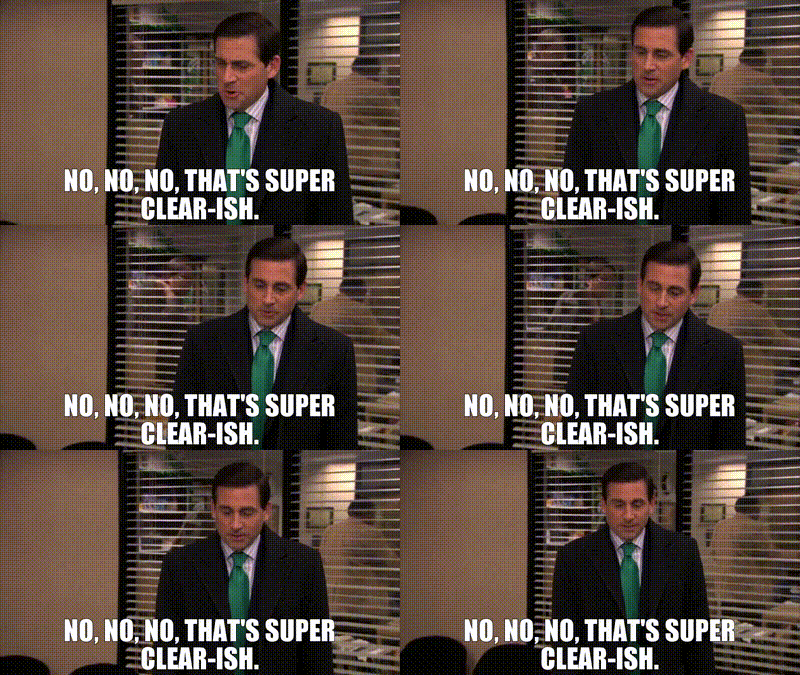
Sometimes, a design exercise can go wrong when the approach or understanding is off, which is why it’s up to you to establish clear expectations for the end result. And for the following example, that’s what I did. But shifting expectations emerged, and I found myself navigating around what could have been a hot toddy mess.
I was interviewing for a product designer role and was given a take-home exercise: redesign the homepage of their blog. I quickly flagged that the assignment leaned heavily on visual design, which wasn’t part of the product design role I was interviewing for. They acknowledged this but insisted I move forward anyway. I gave them both a visual design system and also addressed basic usability issues.
After submitting my designs, I was rejected for not making the page “pixel perfect.” When I brought up our earlier clarification, they acted as if the conversation never happened. Changing expectations mid-exercise? Check. Setting impossible standards? Check. Me dodging a bullet? Double Check.
🚩 Misguided Outcomes
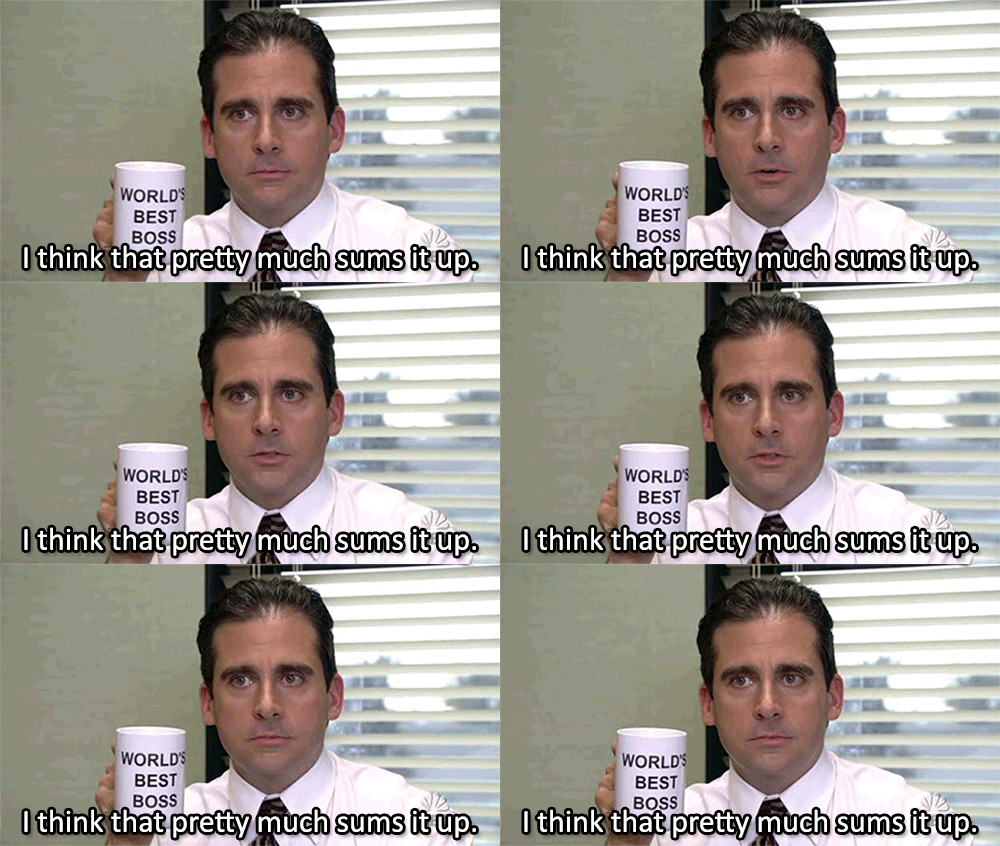
On the topic of design exercises, I found myself in front of interviewers who at first, seemed nitpicky, but it quickly became clear they were just fishing for ideas.
During a whiteboard exercise, I was walking through my thought process, drawing a workflow and labeling each step as I went. As I continued, I was only asked questions about my labels, and not about the actual thinking or steps. And then I was asked, “Could you write that part neater?” A whiteboard exercise is meant to show thinking, not good penmanship, and my belly radar immediately went off.
After speaking with the recruiter, I learned that another designer had felt the same icky vibe. The company seemed more interested in stealing ideas than actually hiring a designer.
It’s so validating that another interviewer had the same gut feeling.
And this is a nice segue to this last one:
🚩 Something’s Amiss
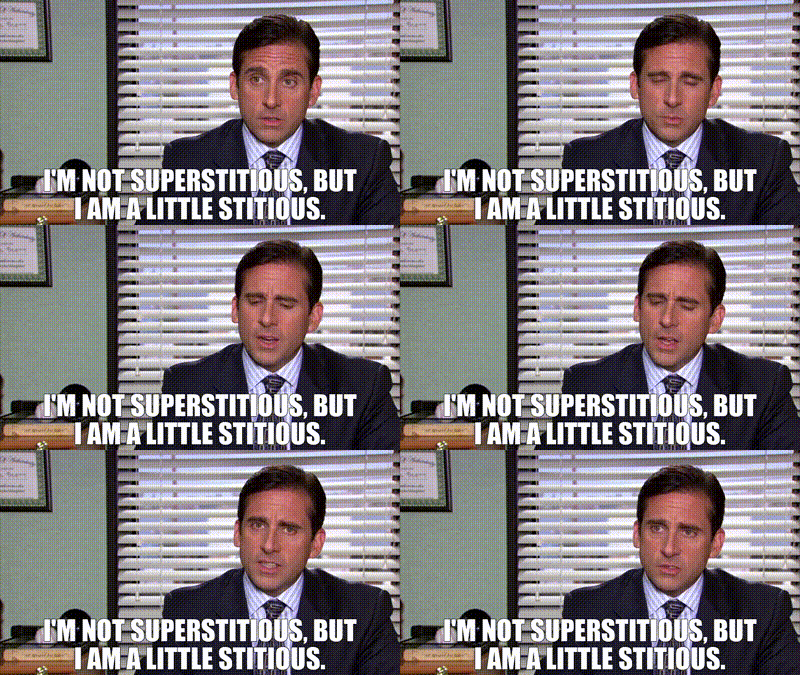
Interview red flags are warning signs that something’s not sitting right, signaling potential issues with a interviewer’s professionalism, or an employer’s toxic culture. And this is mainly because our intuition picked up on something. So pay attention to that feeling.
Trust your gut.
Think of interviews as a two-way evaluation. How they treat you before you’re hired is often the best version of how they’ll treat you after.
Happy Ho-Ho-Holidays!